Explore product updates, engineering guides, application insights, and exhibition news from Heymed Medical, covering medical cable assemblies, EEG electrodes, neurostimulation accessories, and OEM/ODM development.
A common sourcing question is whether an ear clip with the same-looking plug can replace an existing one. In practice, the plug is only one part of the interface. Contact position, clip geometry, pressure distribution, electrode surface, connector, pinout, cable length and strain relief need to be considered as one system.
Heymed Medical offers reference designs covering ear-worn taVNS electrodes, compact spring clips, Ag/AgCl ear clip options and single- or multi-lead electrode cable assemblies. These references give product teams a practical starting point. The final configuration, however, should be confirmed against the host device and the intended use of the finished product.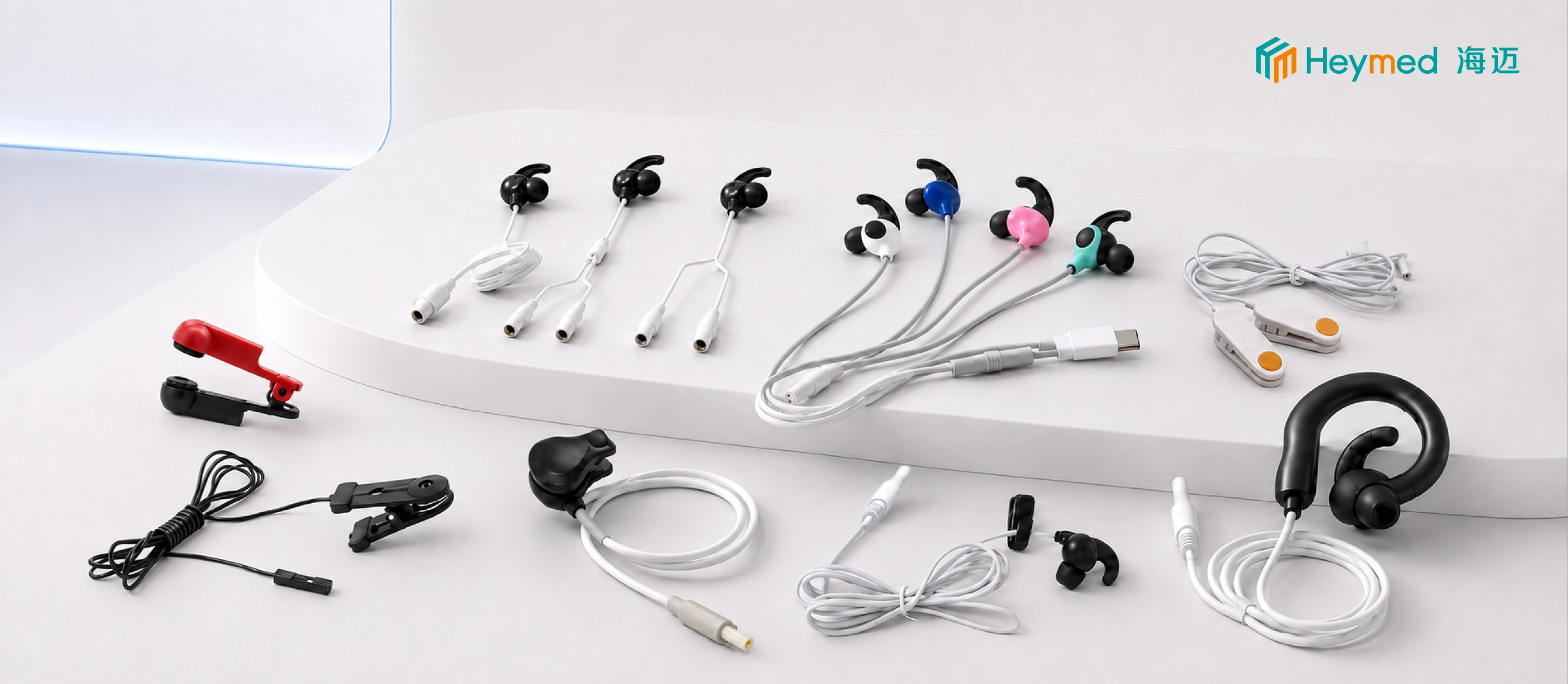
The first question is not which clip looks best. It is what the electrode must do within the host system. Product teams should confirm the assigned channel, number of contacts, polarity, single- or bilateral configuration, expected ear position, connector type and cable routing before choosing a mechanical reference.
This is especially important when an existing product is being replaced. Two plugs can look identical while using different pin assignments or internal wiring. A visual match does not confirm electrical compatibility. A drawing, pinout, mating connector specification or working sample provides a much safer basis for engineering review.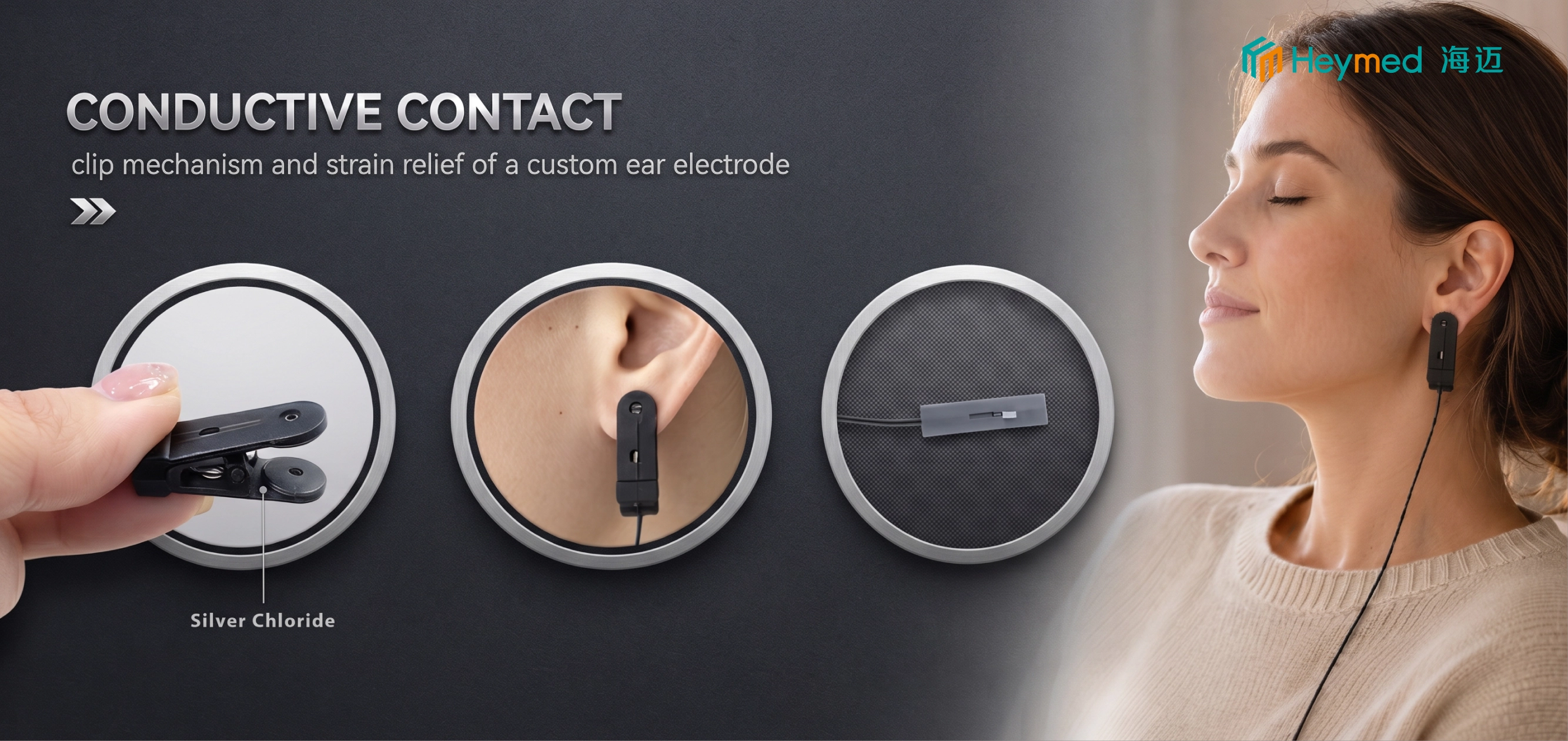
The ear is not a flat or uniform surface. The required contact position influences electrode size, curvature, contact height and the way the clip approaches the ear. Clip force must also be evaluated together with contact area and cable pull. Increasing force alone does not necessarily create a better design.
During development, the team may need to review hinge position, opening range, pressing area, left/right orientation, cable direction and strain relief. When a customer can provide a placement drawing, existing sample or basic ear-interface requirements, these details can be assessed earlier and unnecessary sample rounds can often be reduced.
In a taVNS project, the ear electrode normally acts as a passive external contact and connection accessory. Stimulation output is controlled by the host device. The development review should therefore confirm the number and location of conductive areas, polarity, connector, pinout and the electrical requirements supplied by the device team.
An EEG ear clip may be assigned as a reference, ground or another system-defined channel. The actual function depends on the EEG architecture. Ag/AgCl contact options, lead count, cable layout, shielding and channel identification should be selected according to the acquisition system rather than assumed from the appearance of the clip.
Both products may be worn on the ear, but they should not be treated as interchangeable components without mechanical and electrical confirmation.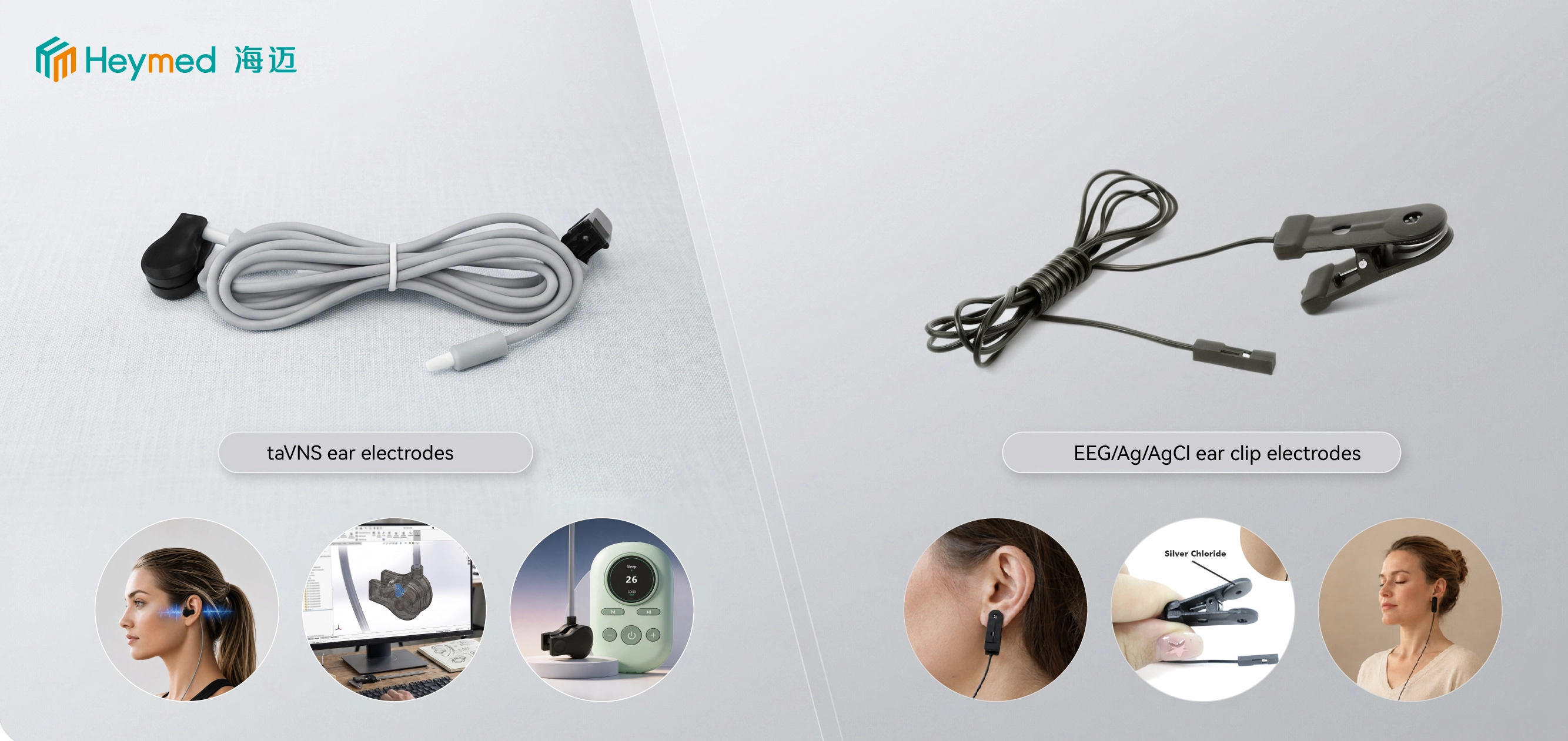
Connector selection should be based on mating dimensions, pinout and system requirements, not the plug name alone. DC 2.35 mm, audio-style plugs and other custom connector options can be reviewed, but the final assembly must be matched to the host device.
Cable length, flexibility, shielding, branch construction, color, marking and strain relief also affect cable handling, strain at the clip and how the assembly is positioned in use. For multi-lead assemblies, channel labels and branch lengths should be defined in the drawing so that sampling and later production follow the same reference.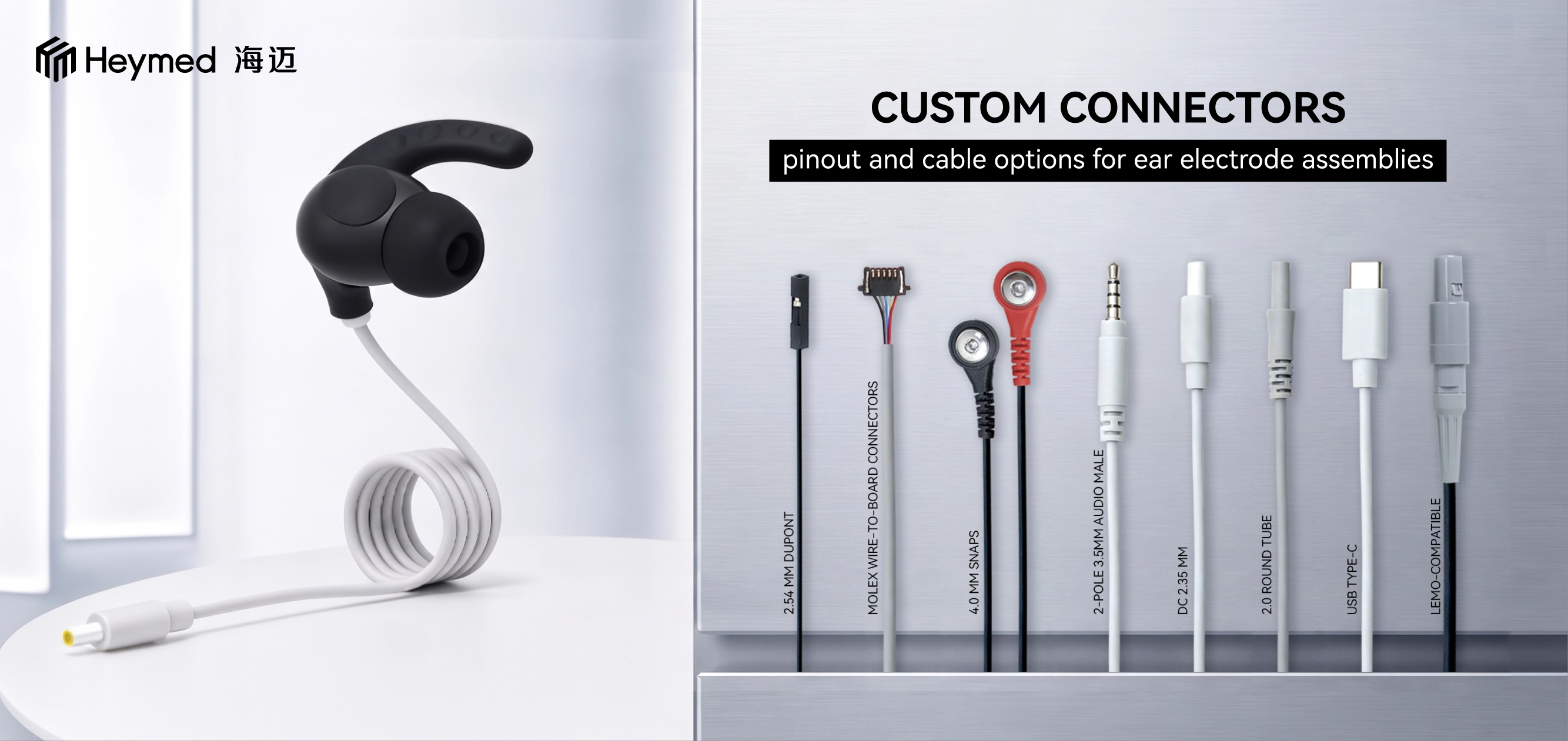
Material selection depends on the type of external contact, expected use, cleaning or replacement approach and the documentation required for the target market. Conductive contact materials, plastics, cable jackets and colorants should be reviewed against the specification agreed for the project.
Heymed Medical can support engineering review, prototyping, controlled inspection and production under its ISO 13485 quality management system. This quality-system statement should not be interpreted as automatic approval of every component or finished device. Product-level CE, MDR, FDA, biocompatibility and other regulatory responsibilities depend on the finished device, intended use, classification, legal manufacturer and market.
A practical development process begins with the host-device information and a clear interface requirement. Heymed Medical then reviews suitable reference structures, identifies the parts that can be retained and defines the areas that need customization. After sample production, the customer evaluates fit, contact behavior and device compatibility before the drawing and specification are released.
Inspection items are agreed according to the product specification. Depending on the project, they may include appearance, dimensions, continuity, resistance, polarity, connector fit, pull force or cable flex testing. Production acceptance should always follow the approved drawing, specification and inspection plan rather than a general catalog description.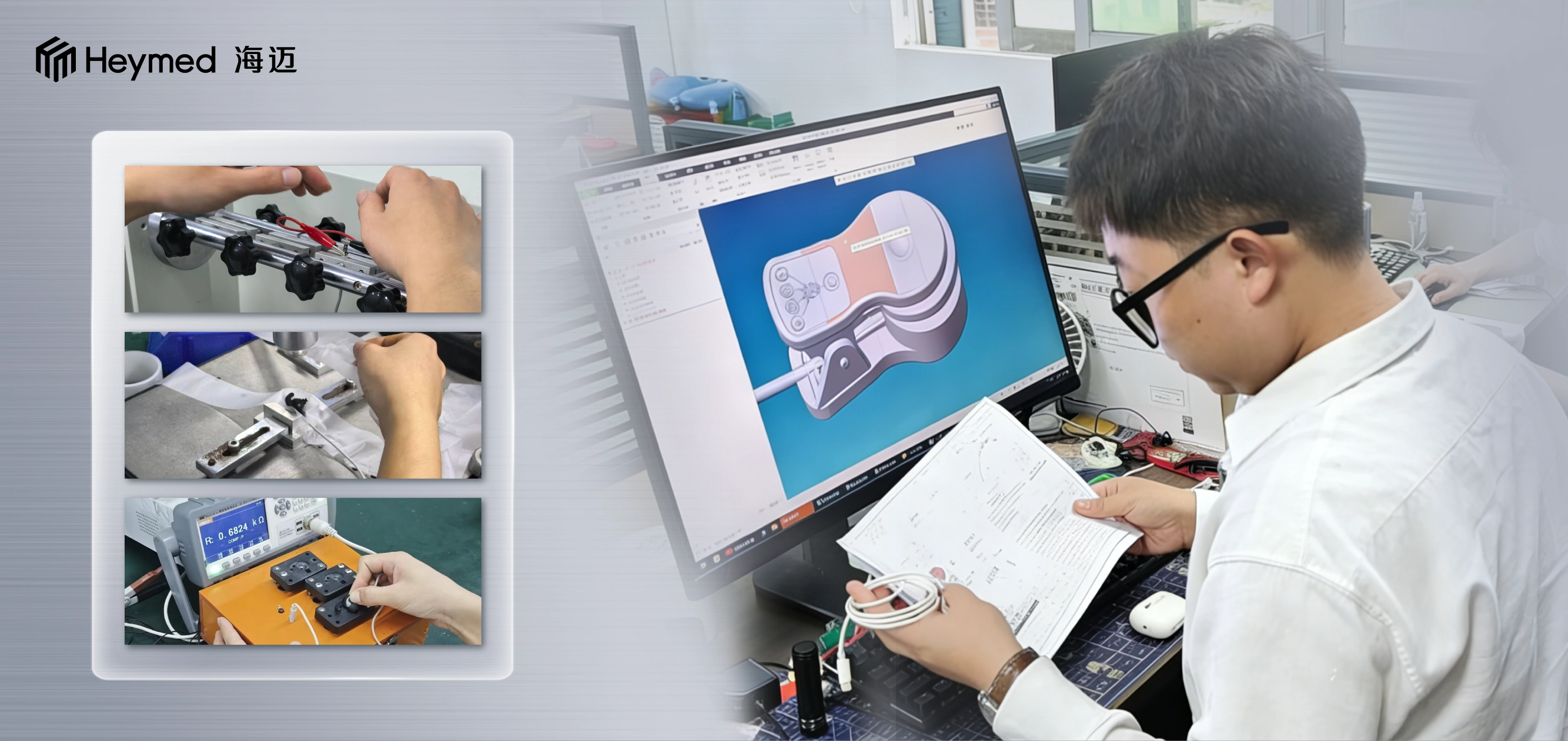
Ear contact. Confirm that the contact reaches the intended position and that the clip can be applied and removed as expected.
Electrical connection. Check continuity, polarity and channel assignment against the approved drawing and host-device information.
Connector fit. Verify mating, retention and cable orientation with the actual device or approved mating connector.
Cable handling. Review branch length, flexibility, strain relief and whether the cable pulls on the ear clip during normal positioning.
Identification. Confirm left/right, channel, polarity, labeling and packaging details before the specification is released.
To make the first review more useful, provide the host-device type, intended electrode function, expected ear position, number of contacts, single- or bilateral configuration, connector and pinout, cable length, material or cleaning requirements, marking and packaging needs, expected sample quantity and estimated production volume. Drawings and working samples are helpful when available.
If some details have not yet been defined, the project can still begin with a product image, interface description and intended configuration. The engineering team can use those inputs to identify the questions that must be resolved before sampling.
Can an existing reference design be modified? Yes. Clip geometry, contact arrangement, connector, cable length, color, marking and packaging can be reviewed for customization, subject to engineering feasibility and the confirmed project specification.
Can one ear electrode be used with several devices? Possibly, but only after the connector, pinout, electrical requirements and mechanical fit have been checked for each device. A matching plug appearance is not sufficient.
Does the catalog reference represent an approved finished medical device? No. The catalog provides component and assembly references for project discussion. Regulatory status is determined within the context of the finished device and target market.
Developing a custom ear electrode project? Start by sending Heymed Medical three items: a connector photo or drawing, the pinout and the intended ear-contact position. If available, include a working sample and cable-length requirement. Our team can then review the ear-contact structure, cable assembly and connector requirements as one complete interface.Send Your Drawing or Sample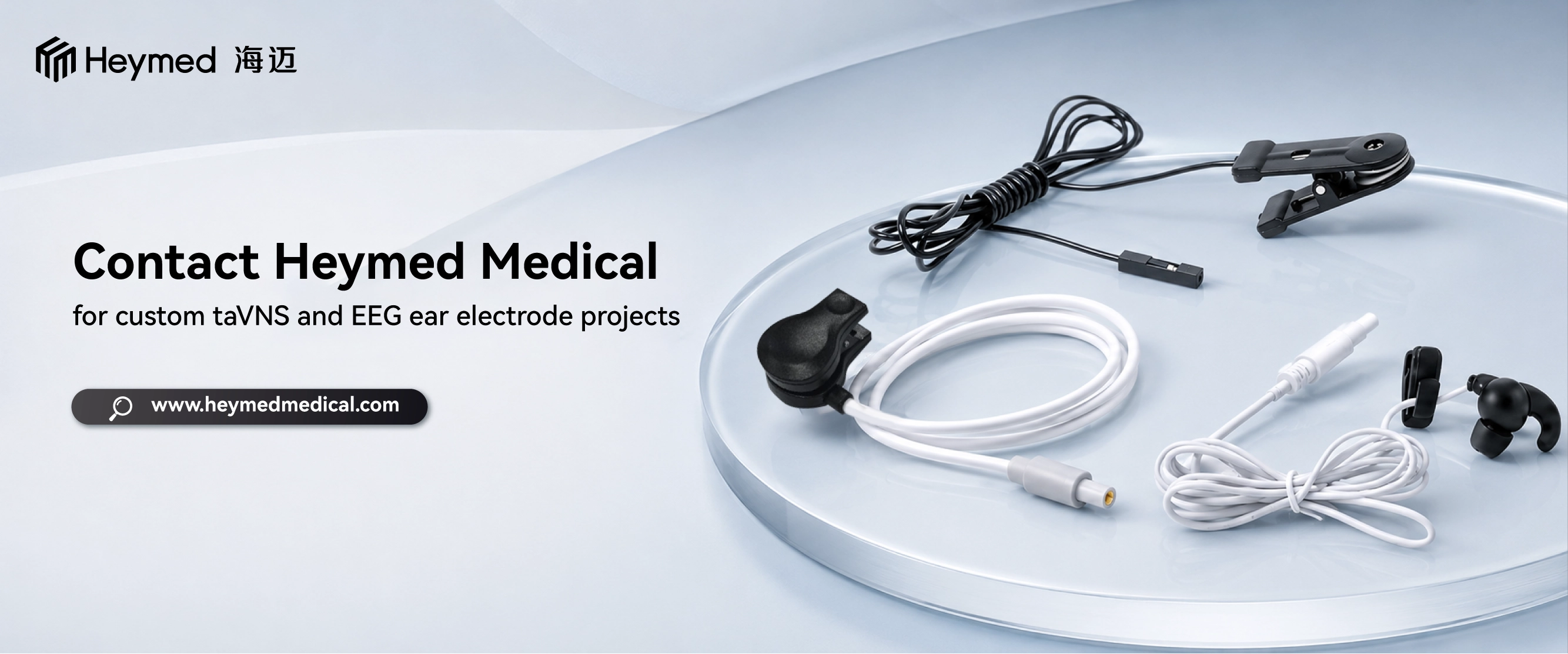
Work with Heymed Medical on OEM/ODM development and controlled manufacturing for tVNS and taVNS products, EEG electrodes, medical lead wires, custom cable assemblies, and medical docking and charging products—from engineering samples and validation to volume production.
Tell our engineering team about your product application, device interface, performance targets, compliance needs, and expected quantity. We will review your information and contact you to discuss technical feasibility, customization options, and recommended next steps.
Tip: A drawing, device interface photo, pinout diagram, or reference sample can help our engineering team evaluate your project more accurately and efficiently.
 Search