Explore product updates, engineering guides, application insights, and exhibition news from Heymed Medical, covering medical cable assemblies, EEG electrodes, neurostimulation accessories, and OEM/ODM development.
Developing a custom medical cable, wearable electrode, connector, or charging interface requires more than sending a reference photo and requesting a quotation.
A successful medical OEM/ODM project begins with a clear understanding of the device application, electrical requirements, patient-contact conditions, mechanical structure, verification plan, target market, and expected production quantity.
This guide explains the key stages of developing a custom medical connectivity product and the information medical device manufacturers should prepare before starting a project.
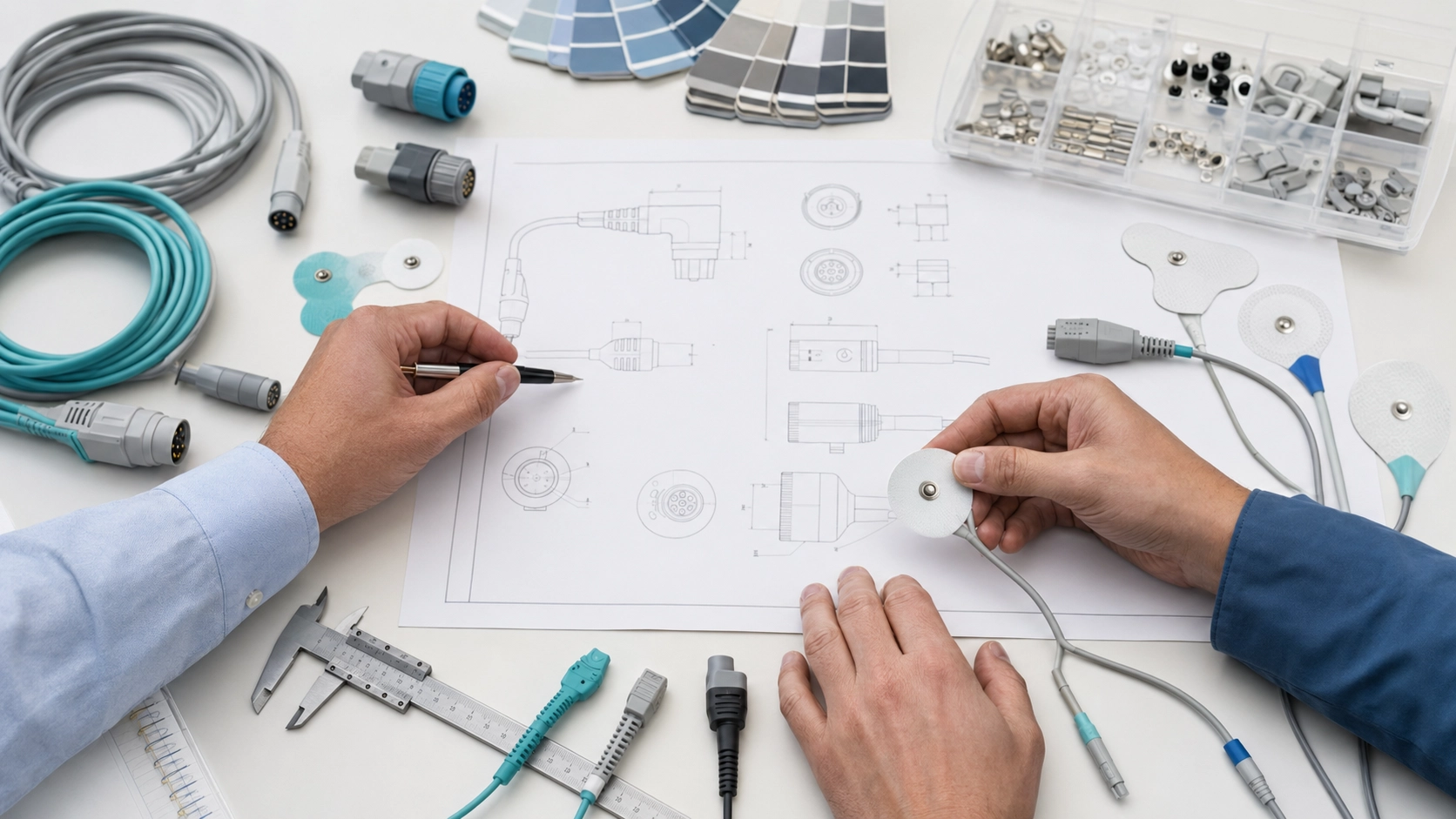
What Is the Difference Between Medical OEM and ODM?
OEM and ODM describe two different levels of development support.
Medical OEM Development
In an OEM project, the customer normally provides an existing design, approved drawing, reference sample, bill of materials, or detailed technical specification.
The manufacturing partner evaluates manufacturability, confirms materials and processes, produces samples, completes the required inspections, and manufactures the product according to the approved documentation.
Medical ODM Development
In an ODM project, the manufacturing partner participates more deeply in product development.
Support may include application evaluation, connector selection, cable and electrode structure design, material recommendations, 2D or 3D drawings, prototype development, testing support, packaging, and preparation for scalable manufacturing.
Some projects combine both approaches. A customer may provide the device and electrical architecture while the manufacturing partner develops the cable assembly, electrode, connector, overmold, charging interface, or wearable structure.
Step 1: Define the Product Application and Intended Use
Before discussing materials or prices, the project team should explain what the product will connect to and how it will be used.
Important application information includes:
• Type of medical or healthcare equipment
• Intended user and use environment
• Patient monitoring, signal acquisition, stimulation, charging, or data function
• Wearable, handheld, portable, or fixed equipment
• Expected recording or operating duration
• Reusable or single-use requirements
• Indoor, home, laboratory, or professional use
• Cleaning and maintenance method
• Target market and applicable compliance requirements
For products such as EEG electrodes, ECG lead wires, EMG cables, tVNS ear electrodes, or physiotherapy cables, the intended contact location and duration should also be explained.
A product designed for short-term signal acquisition may require a different electrode, material, cable structure, or wearing method from a product intended for repeated or extended use.
Step 2: Provide Device Interface and Electrical Requirements
A connector that fits mechanically may still be electrically incompatible with the device.
The following technical information should be confirmed:
• Device connector type
• Mating connector specifications
• Pin quantity and pinout
• Signal, power, or data functions
• Voltage and current requirements
• Wire gauge and conductor quantity
• Shielding and grounding requirements
• Required cable length
• Branch quantity and branch length
• Connector orientation and locking method
• Communication or charging requirements
When available, customers should provide connector datasheets, pinout diagrams, device interface photographs, drawings, or physical samples.
For proprietary connectors or interfaces, the engineering team may need to measure the mating structure and develop a corresponding connector housing, terminal arrangement, PCB, pogo-pin interface, or molded component.
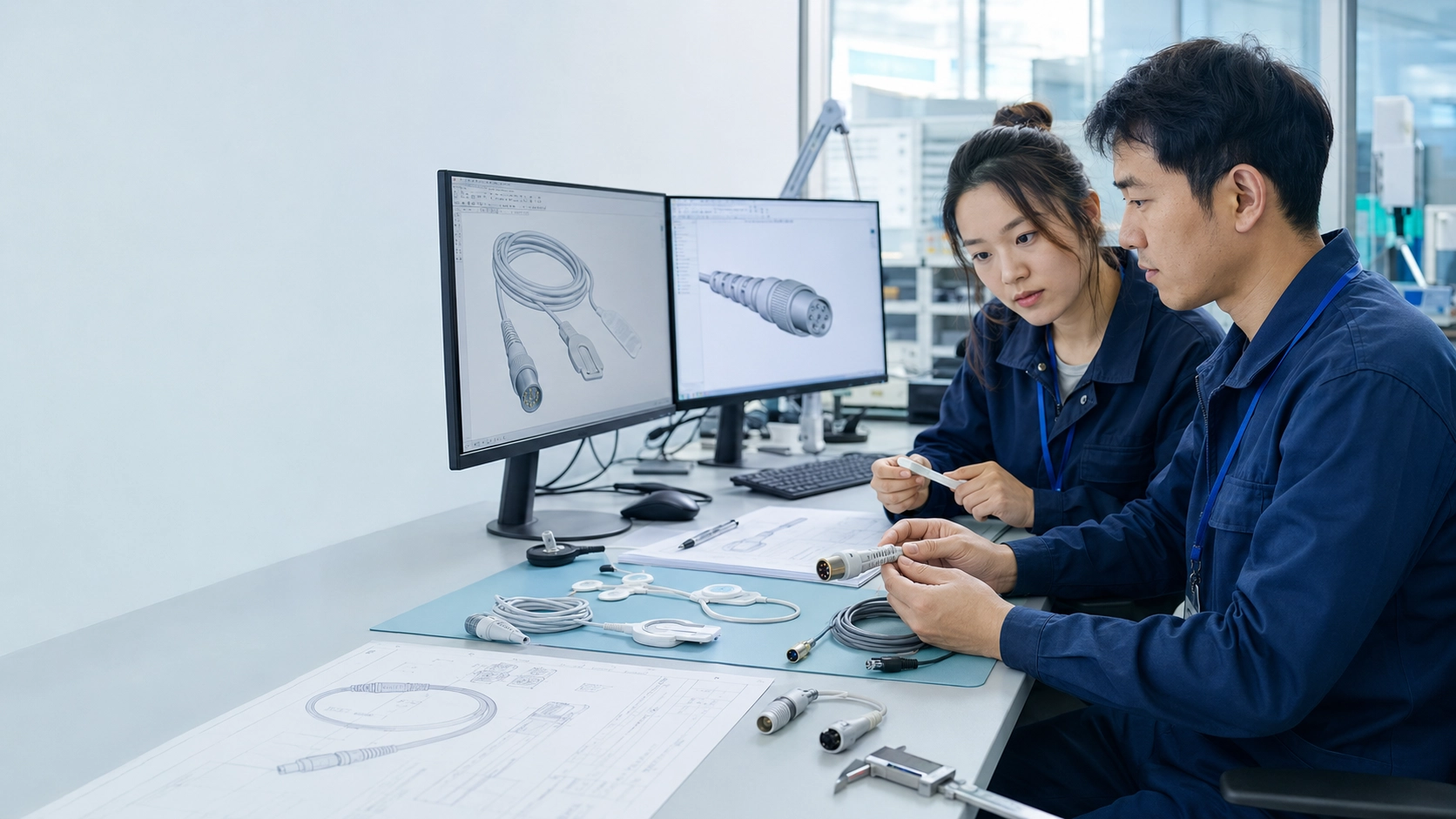
Step 3: Define Cable, Electrode and Mechanical Requirements
After the application and interface have been confirmed, the product structure can be developed.
Custom Medical Cable Requirements
Medical cable assembly specifications may include:
• Conductor material and wire gauge
• Number of conductors
• Twisted-pair or shielded construction
• Cable jacket material
• Cable diameter and flexibility
• Color and surface finish
• Bending and movement requirements
• Strain-relief structure
• Overmold shape and dimensions
• Connector retention requirements
• Labels and channel identification
Custom Electrode Requirements
For dry electrodes, wet electrodes, ear electrodes, ECG electrodes, EMG electrodes, or other wearable electrodes, the development brief may include:
• Electrode shape and dimensions
• Intended body or scalp contact location
• Contact material requirements
• Contact pressure and mounting method
• Dry, wet, gel-based, or conductive silicone structure
• Left- or right-side configuration
• Reusable or disposable structure
• Cleaning method
• Cable attachment method
• Wearing comfort and movement requirements
The final material and structure should be evaluated according to the complete medical device, intended use, contact type, use duration, and applicable verification plan.
Step 4: Engineering Evaluation and Design for Manufacturing
Once the basic requirements have been collected, the engineering team evaluates whether the proposed product can be manufactured consistently.
The evaluation may cover:
• Connector and terminal compatibility
• Cable conductor and shielding design
• Contact resistance and signal path
• Crimping, soldering, or welding method
• Electrode-to-cable connection
• Mechanical retention and strain relief
• Overmolding and sealing feasibility
• Tooling and fixture requirements
• Assembly sequence
• Inspection points and testing methods
• Potential production risks
Design for manufacturing is especially important when a product includes compact wearable structures, multiple channels, fine wires, skin-contact electrodes, waterproofing, magnetic connectors, pogo pins, or custom-molded parts.
Identifying production risks before tooling and sampling can reduce repeated design changes later.
Step 5: Prototype Sampling and Verification
After the drawing and material proposal have been reviewed, prototype samples can be produced.
Prototype quantity and lead time depend on the product complexity, material availability, tooling requirements, and testing scope.
Prototype evaluation may include:
• Dimensional and appearance inspection
• Pinout and continuity testing
• Contact resistance testing
• Insulation and withstand-voltage testing
• Signal transmission evaluation
• Connector insertion and withdrawal testing
• Cable bending and flex testing
• Pull-force and strain-relief testing
• Electrode contact evaluation
• Charging and data-function testing
• Equipment compatibility testing
• Wearing and usability evaluation
Testing requirements should be defined according to the final device, intended application, target market, and applicable standards.
The medical device manufacturer remains responsible for confirming that the completed device meets its regulatory, safety, performance, and clinical requirements.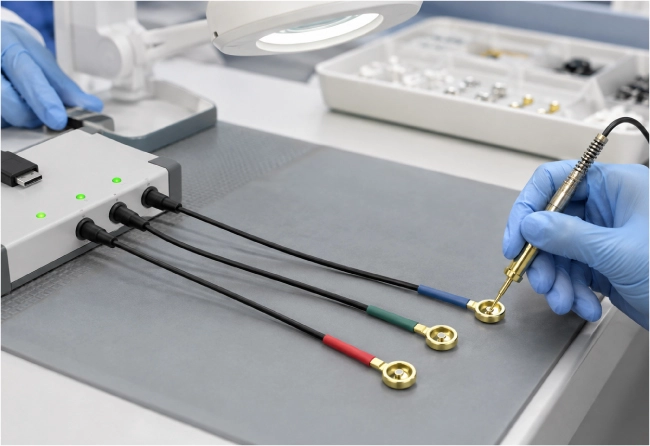
Step 6: Pilot Production and Process Confirmation
A pilot production run helps verify whether the approved design can be manufactured consistently before entering volume production.
During pilot production, the manufacturing team can confirm:
• Work instructions and assembly sequence
• Tooling, fixtures, and test equipment
• Material preparation and traceability
• Critical process parameters
• Inspection standards
• Operator training requirements
• Production yield and cycle time
• Packaging and labeling process
• Potential quality or efficiency risks
Any necessary changes should be documented and approved before mass production.
Step 7: Controlled Mass Production and Quality Assurance
After the sample and pilot-production results have been approved, the project can move into mass production.
A controlled medical cable and electrode manufacturing process may include:
• Incoming material inspection
• Approved supplier and component control
• Crimping, soldering, assembly, and overmolding control
• In-process inspection and testing
• Electrical continuity and performance testing
• Mechanical and appearance inspection
• Product identification and batch traceability
• Final inspection and packaging verification
• Change control and document management
Heymed Medical supports production under an ISO 13485 quality management system. Specific inspection and testing requirements are established according to the approved product specification and customer quality agreement.
What Information Is Needed for a Medical OEM/ODM Quotation?
Providing complete project information helps the engineering team prepare a more accurate evaluation and quotation.
Customers are encouraged to provide:
• Product type and intended application
• Device model and interface information
• Connector type and pinout
• Cable length and branch dimensions
• Signal, voltage, current, or data requirements
• Electrode type and contact requirements
• Material or compliance requirements
• Drawings, photographs, or reference samples
• Required tests and acceptance criteria
• Prototype quantity
• Estimated order quantity or annual demand
• Target project timeline
• Branding, labeling, and packaging requirements
If a complete drawing is unavailable, an installation photograph, device interface image, or existing sample can help the engineering team understand the project and identify the information still required.
How Heymed Medical Supports Custom Medical Product Development
Heymed Medical provides OEM and ODM development support for medical and healthcare products, including:
• tVNS and taVNS devices, ear electrodes, and cables
• Dry and wet EEG electrodes
• EEG caps, lead wires, and accessories
• ECG and EMG lead wires and electrodes
• TENS, EMS, and physiotherapy cables
• Patient monitoring cable assemblies
• Wearable medical device connections
• Medical pogo-pin and magnetic connectors
• Medical docking and charging solutions
• Custom medical connectors and adapters
Our support covers requirement review, connector and material selection, cable and electrode structure development, prototype sampling, design-for-manufacturing evaluation, testing, pilot production, and scalable manufacturing.
Start a Medical OEM/ODM Project
A well-prepared project brief can reduce repeated communication, shorten engineering evaluation, and improve the transition from prototype to production.
To begin a custom medical cable, electrode, connector, or charging product project, share your application requirements, device interface information, drawings, photographs, samples, expected quantity, and verification requirements with the Heymed Medical engineering team.
We will evaluate the project and recommend an appropriate development path based on its technical and manufacturing requirements.
Work with Heymed Medical on OEM/ODM development and controlled manufacturing for tVNS and taVNS products, EEG electrodes, medical lead wires, custom cable assemblies, and medical docking and charging products—from engineering samples and validation to volume production.
Tell our engineering team about your product application, device interface, performance targets, compliance needs, and expected quantity. We will review your information and contact you to discuss technical feasibility, customization options, and recommended next steps.
Tip: A drawing, device interface photo, pinout diagram, or reference sample can help our engineering team evaluate your project more accurately and efficiently.
 Search